Delhi First Aid Training for Workplace
A workplace emergency can begin in seconds. Someone may cut a hand in a factory, faint in an office, choke during lunch, or suffer a serious fall. In that moment, people need more than a first-aid box on the wall. They need the confidence to act.
Delhi First Aid Training for Workplace helps employees learn what to do before a doctor or ambulance arrives. Good training can protect lives, reduce panic, and help your team respond in a clear and safe way. First aid is meant to preserve life, stop a condition from getting worse, and support recovery until professional help is available.
Why Workplace First Aid Matters
Picture a busy office in Connaught Place. A staff member suddenly falls near the reception desk. One person calls for help. Another looks for the first-aid kit. But nobody knows how to check breathing or respond to the emergency.
This is a common problem. Many workplaces have supplies, but few people know how to use them correctly. Training changes that.
Employees learn how to:
- Check the scene before helping.
- Call emergency services quickly.
- Give basic CPR.
- Help a person who is choking.
- Control bleeding.
- Treat minor burns and cuts.
- Handle fainting and shock.
- Support a person after a fall.
- Use an AED when one is available.
- Keep an injured person calm until help arrives.
The goal is not to turn office staff into doctors. The goal is to give them simple steps for the first few minutes, when calm action matters most.
Training for Delhi Workplaces
Every workplace has different risks. A software office in Noida may need strong CPR and choking practice. A warehouse in Okhla may need more focus on cuts, lifting injuries, burns, and falls. A construction site near Dwarka may need training for serious bleeding, fractures, heat stress, and emergency evacuation.
That is why workplace first-aid training should not be a one-size-fits-all lecture.
A useful course should include:
CPR and Basic Life Support
Employees practise how to respond when a person is not breathing normally or is unresponsive. Hands-on practice is important because watching a video is not the same as using correct technique under pressure.
Choking Response
Choking can happen in offices, schools, restaurants, and factories. Staff should know how to recognise the problem and give suitable assistance without causing more harm.
Wounds, Burns, and Bleeding
Workers learn how to use gloves, apply pressure, cover wounds, and seek medical help. They also learn why some home remedies can make burns or wounds worse.
Fainting, Shock, and Falls
Delhi offices often have long working hours, crowded spaces, stairs, and heavy equipment. Training helps staff respond safely when someone faints, falls, or shows signs of shock.
Emergency Communication
A trained first aider must know whom to call, what location details to share, and how to guide an ambulance to the building. This is especially useful in large areas such as Gurugram, Ghaziabad, Faridabad, and the Delhi-NCR business zones.
Who Should Attend?
The best plan is to train more than one person. At least a few employees from each shift should know basic first aid. This matters when the main first aider is on leave, working from home, or in another part of the building.
Training is useful for:
Regulatory Note: The Delhi Directorate of Industrial Safety and Health oversees occupational safety matters under the Factories Act, Delhi Factories Rules, and related laws. Factories and higher-risk workplaces should check the rules that apply to their size, industry, and work process.
What Is First Aid and Why Does It Matter at the Workplace?
First aid refers to the immediate, temporary medical care provided to an injured or suddenly ill person before professional emergency services arrive. The concept was pioneered by General Friedrich von Esmarch (1823–1908) and has evolved significantly with advances in medicine and technology.
In today's fast-paced work environments — from factories and construction sites to corporate offices and schools — accidents and occupational health emergencies are more common than ever. Cardiac arrests, severe cuts, chemical burns, electric shocks, and choking incidents can strike without warning. In those critical first minutes before paramedics arrive, a trained colleague can mean the difference between life and death.
We all perform basic first aid instinctively — applying a bandage, removing a splinter, or cooling a sunburn. But certain emergencies demand faster, more skilled intervention: managing an unresponsive casualty, deciding which injury takes priority, or administeringCPR under pressure. First aid training bridges the gap between panic and purposeful action.
Important: This article is for educational purposes only. In a medical emergency, call 112 (India) immediately and follow dispatcher instructions.
Did you know? Effective CPR administered within the first 3–5 minutes of cardiac arrest can double or triple a victim's chance of survival. Don't wait for ambulances — act now.
Why First Aid Training Is Critical for Organizations in Delhi NCR
Medical emergencies in the workplace carry significant financial, legal, and human costs. When employees are injured and no trained first aider is present, the consequences can be severe and far-reaching:
- Preventable loss of life due to delayed intervention
- Increased healthcare costs and insurance premiums
- Legal liabilities, compensation claims, and regulatory penalties
- Loss of productivity, employee morale, and company reputation
- Non-compliance with OSHA and Factory Act workplace safety mandates
a certified first aider on your team means that when emergencies happen — and they do — Your organization can respond immediately, confidently, and competently. A proper first aid response can save lives and save organizations lakhs of rupees in treatment costs and compensation payouts.
Doctor-Led Instruction
All courses taught by practicing physicians and certified emergency medical professionals.
Updated Curriculum
Aligned with AHA, WHO, and Indian Red Cross Society international protocols.
Small Batch Sizes
Max 15 participants per session for individual assessment and hands-on practice.
Industry-Specific Modules
Customized training for factories, offices, schools, healthcare, and hospitality.
What Every Workplace First Aid Kit Must Contain
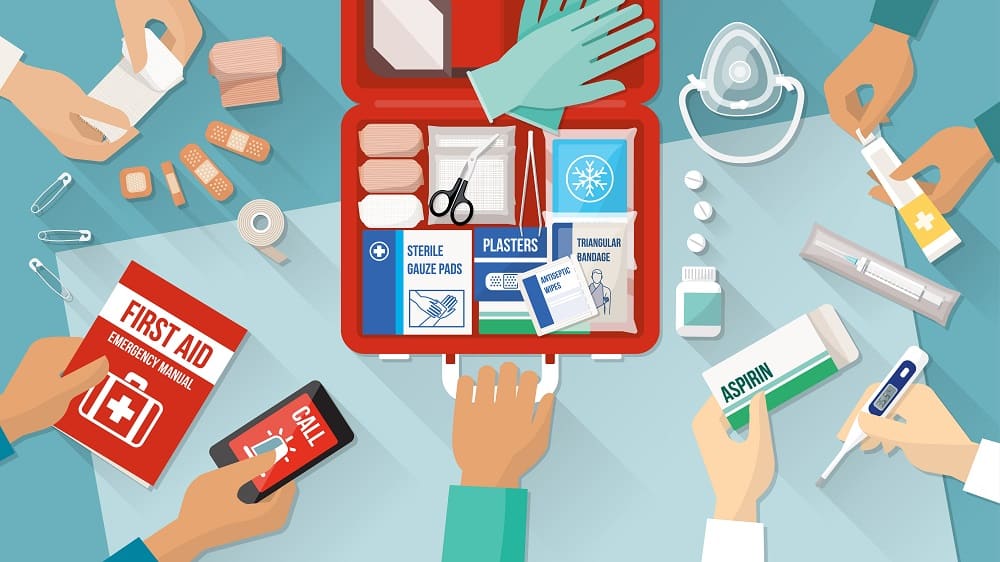
A well-stocked, regularly inspected First Aid Kit is the first line of defense in any emergency. Whether you manage a factory floor, corporate office, school, or event venue, ensure your kit always contains these essential items:
Maintenance tip: Inspect and restock your first aid kit every 3 months. Check expiry dates on all medications and replace used or damaged items promptly. Browse our ready-made kits →
Explore Common Emergency Scenarios Covered in Our Training
Our First Aid training program — available both in-person and online — covers a comprehensive range of emergency situations that workers and caregivers may encounter. Complete each module and test your retention with our embedded online quiz:
Our 4-Step Practical Training Approach
Building genuine emergency response skills requires far more than lectures and textbooks. Our training methodology is designed to develop confident, competent first aiders through a structured blend of theory and hands-on practice.
Medical Theory
Evidence-based instruction aligned with AHA, WHO, and Red Cross protocols.
Hands-On Practice
CPR mannequins, AED units, wound care kits, and scenario simulations.
Scenario Drills
Realistic workplace emergency simulations — factories, offices, construction sites.
Assessment & Certification
Individual skill assessment followed by internationally recognized certification.
Choosing the Right Course
When comparing providers, do not choose only by the lowest price. Ask if the course includes practical demonstrations, trainer qualifications, attendance records, certificates, and workplace-specific examples.
A strong Delhi First Aid Training for Workplace programme should offer:
Curriculum Standards: The Indian Red Cross lists a standard first-aid programme that includes topics such as CPR, wound care, and emergency response. Many workplace courses also include basic life support and AED awareness.
First Aid Training Coverage Across Delhi NCR & Northern India
24x7 Medical Service is the leading First Aid and CPR Training provider in Northern India, conducting both centre-based and on-site corporate training programs across:
- Delhi NCR: New Delhi, Noida, Ghaziabad, Gurgaon (Gurugram), Faridabad, Bahadurgarh
- Haryana: Gurgaon, Faridabad, Panipat, Rewari, Sonipat
- Uttar Pradesh: Noida, Greater Noida, Agra, Lucknow, Kanpur
- Rajasthan, Himachal Pradesh & Punjab: On-request corporate programs
- Pan-India: Customized on-site training available for large corporates anywhere in India
Make First Aid Part of Daily Safety
Training works best when it is part of a wider safety plan. Keep first-aid boxes easy to find, check supplies often, post emergency numbers, and make sure new employees receive basic safety guidance.
Run short practice drills. Ask simple questions:
These small checks can remove confusion during a real emergency.
Whether your business is in Saket, Rohini, Lajpat Nagar, Mayur Vihar, Nehru Place, Karol Bagh, Okhla, or another part of Delhi-NCR, trained employees create a safer workplace. A first-aid course is not just a certificate for a file. It gives your team a clear plan when every second feels important.
Frequently Asked Questions
Transform Your Workplace Safety Today
Don't wait for an emergency to realize the importance of preparedness. Equip your employees with life-saving first aid skills certified by medical professionals.